
Overview of the Incident
In June 2025, the European Public Prosecutor’s Office (EPPO) and Greek police jointly launched “Operation Calypso,” seizing 480 containers from China at the important Mediterranean hub port of Piraeus. The actual value of these goods exceeded €700 million. The cargo covered categories such as electric scooters, clothing, and footwear. Due to suspected forged invoices, underreported cargo values, and fictitious countries of origin, this was identified by the EU as one of the largest tax evasion cases for Chinese goods in history.
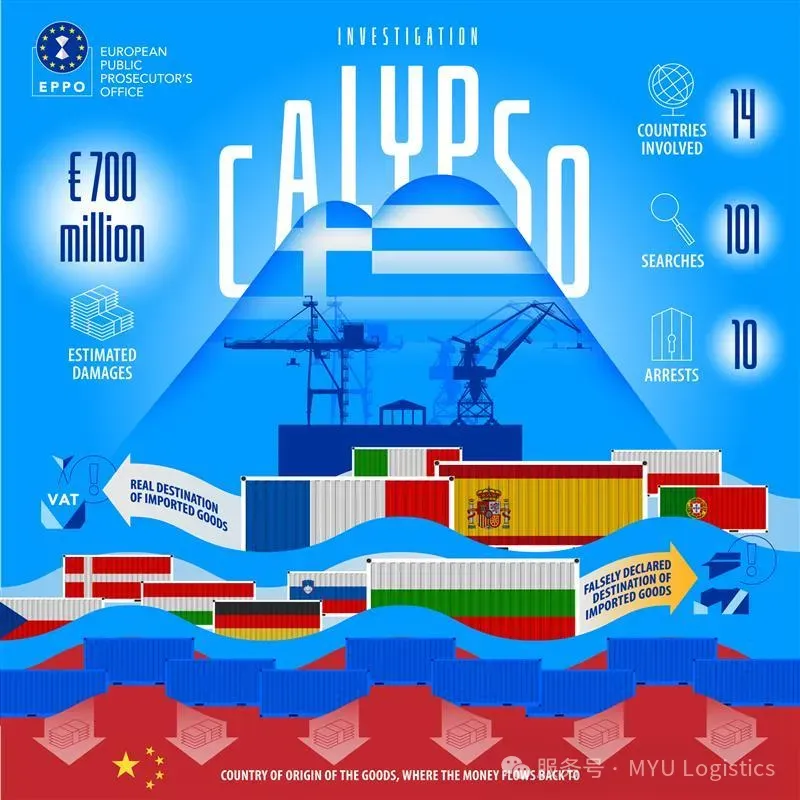
Investigators also seized 7,133 electric bicycles, 3,696 electric scooters, and €5.8 million in cash during the operation, thoroughly exposing the long-hidden gray customs clearance chain in China-Europe trade. The group used methods such as forging invoices, underreporting cargo values, and falsely declaring countries of origin to significantly evade taxes due. For example, declaring an electric scooter actually worth €500 as only €100, with some categories having tax evasion ratios as high as 80%.
How Did the Gray Channel Work?
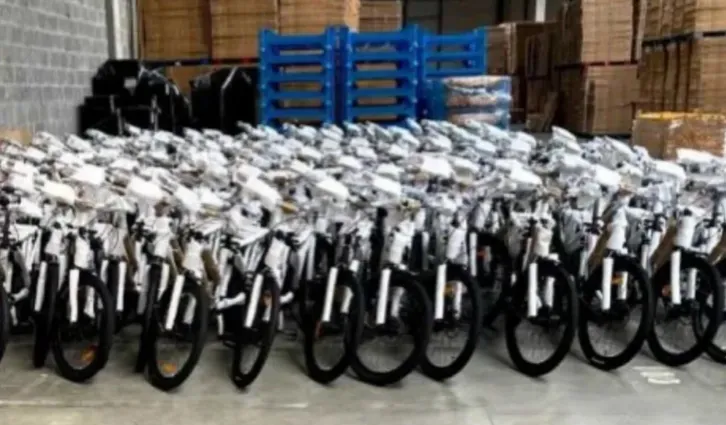
Behind this case lies an elaborately designed transnational smuggling network. Criminal organizations typically import goods from China, distribute them within the EU, and ultimately transfer funds back to China through money laundering channels.
Their core methods include:
- Method 1: Forge commercial invoices, declaring high-value goods as low-tax categories
- Method 2: Use the EU CP42 procedure to falsely declare goods will be sent to other member states, while actually selling on the domestic black market
- Method 3: Apply for VAT deferral through shell companies, causing massive tax revenue losses
EU Crackdown, Logistics and Insurance Industry Under Pressure

This case marks another heavy EU crackdown on gray trade following the 2023 Liège, Belgium incident.
The operation triggered a series of chain reactions:
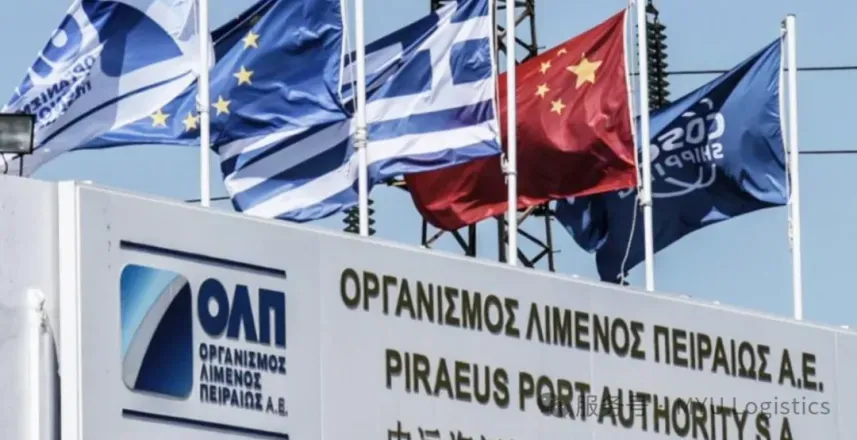
- Port of Piraeus operations delayed over 48 hours
- China-Europe route inspection rates rose from 3.7% to 21.6%
- Freight forwarder document review time extended to 8 hours, with 17 additional supplementary material requirements
- Freight insurance rates rose sharply, with “customs seizure insurance” premiums increasing 5-fold
Industry Faces Growing Pains, Compliance Costs Soar
Under the dual regulatory pressure of Europe and China, many businesses are experiencing severe challenges. Some business owners report that goods stuck in ports incur high storage fees daily, facing huge loss risks. Compliance costs for the freight forwarding industry are rising sharply. New EU regulations require them to conduct “enhanced due diligence” on customers, verifying business information, transaction authenticity, and fund flows.
Taking a mid-sized freight forwarder as an example: to meet requirements, they need to hire compliance specialists, introduce traceability systems and credit services, increasing annual costs by over 1 million RMB, posing huge pressure on businesses with already thin profit margins. Surveys show that within months after the incident, over 10% of European small and medium freight forwarders have exited or reduced their China business.
Opportunities in Crisis: Compliant Transformers Stand Out
Crisis also contains opportunities. Some businesses that planned ahead for compliance are growing against the trend. For example, an electric tool brand that invested in blockchain traceability systems saw customs clearance efficiency improve 40% and exports to Europe grow 25%.
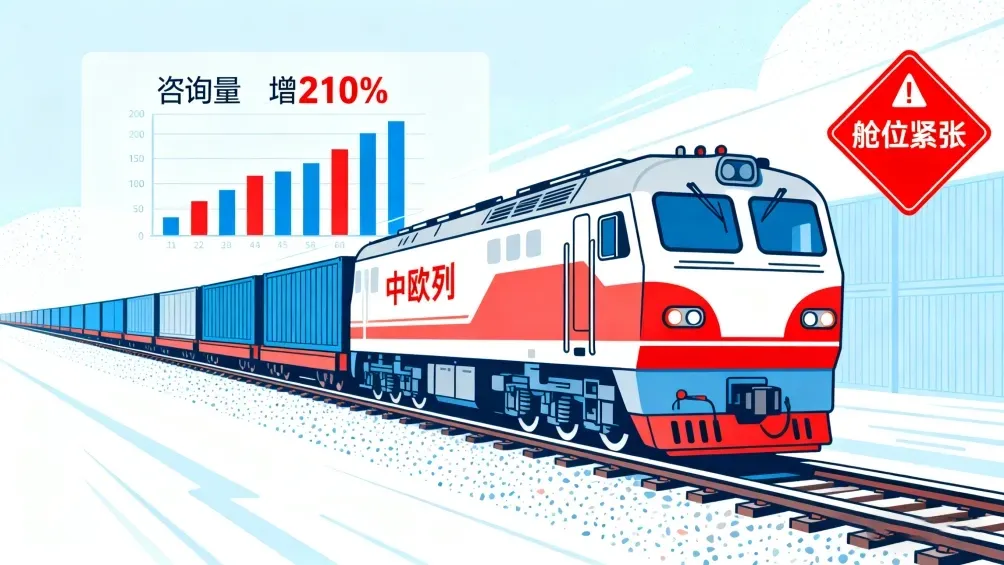
Intelligent financial tools significantly improve efficiency, with some companies reducing their tax refund cycles from 15 days to 5 days and cutting labor costs by 60%. Large freight forwarding enterprises are accelerating digitalization, with over 80% of leading companies building visible supply chain platforms, using IoT and blockchain technology to significantly reduce customs clearance time by 60%. China-Europe railway trains, as a compliant trade channel, are increasingly favored, with consultation volume surging 210% after the incident, with some routes experiencing tight capacity.
Building a New Ecosystem
Full-Chain Compliance and Talent Development
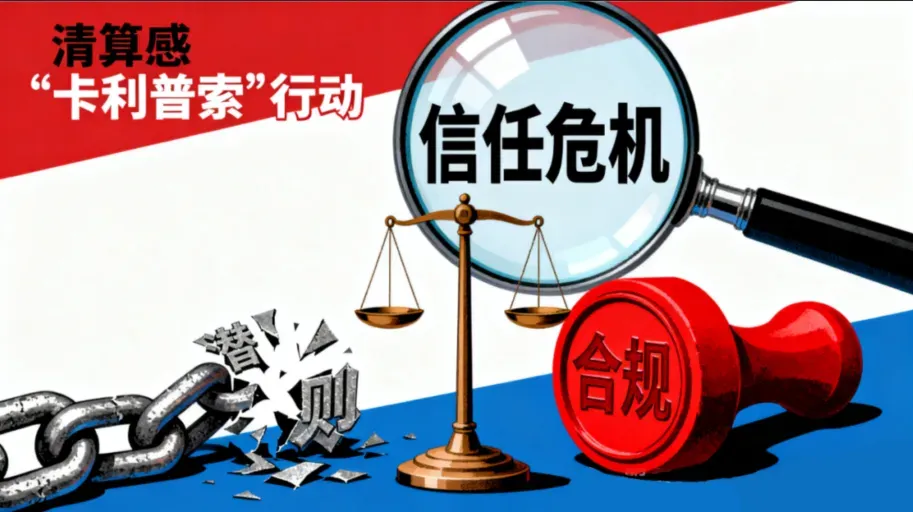
This incident is a thorough清算 of trade “hidden rules,” exposing a crisis of trust that requires systematic industry-wide reconstruction.

Enterprises need to reconstruct export models, clarify commission relationships, and ensure “goods flow, capital flow, invoice flow” are unified through ERP systems. Setting up overseas warehouses has become a key strategy that can effectively avoid maritime risks, achieve local delivery, and improve consumer experience. Enterprises should proactively research and match policy dividends, such as fully utilizing RCEP agreements and cross-border e-commerce regulatory codes for convenience channels. The professional talent gap is huge, with emerging professions like “customs compliance auditor” commanding high daily wages, becoming a market hotspot.
Moving Toward Transparent and Intelligent Regulatory Future
The EU is building a “transparent, strict, intelligent” regulatory network.
Germany uses AI big data systems directly connected to e-commerce platforms, synchronizing payment and logistics information. Platforms like Amazon mandatorily require sellers to provide VAT numbers and withhold and remit VAT on their behalf, becoming an extension of regulation. China’s tax supervision is also becoming increasingly sophisticated, with violations carrying serious consequences including high fines, credit downgrades, and even追溯 liability. As industry experts say: “Rather than dancing on tightrope, it’s better to solidly build internal strength. After the storm, truly capable enterprises will go far and steady.”
Conclusion
This incident marks the end of the gray era of China-Europe trade. With the deep linkage of EU intelligent audit systems and China’s “Golden Tax Phase IV,” the global regulatory network is becoming increasingly strict, and compliance has become the only path for cross-border trade.
In this context, MYU Logistics, as an international freight forwarding expert, relies on its professional trading company and logistics service capabilities to provide safe, worry-free, efficient one-stop compliant global solutions for cross-border sellers.
With our own trading company as the main entity, we provide you with full-process compliance services covering foreign exchange collection, tax refunds, and customs declaration: using formal banking channels for foreign exchange collection with exchange rates better than market levels; professional teams efficiently handle export tax refunds, helping enterprises improve profit margins; full-process compliance operations, completely avoiding account and tax risks. From raw material procurement to terminal distribution, we rely on our localized service networks in Spain and Morocco to provide reliable end-to-end logistics support for Chinese enterprises going global in Europe and Africa.
MYU Logistics makes compliant global expansion simple and reliable, helping you focus more energy on business expansion and calmly face challenges in global trade transformation. In the new ecosystem of transparent trade, we join hands with you for a win-win future.