

The EU has recently approved a completely new toy safety regulation, called by the industry the “strictest toy safety measures in history.” The new regulation not only significantly strengthens restrictions on harmful chemicals, but also mandates that all toys sold in the EU market be equipped with digital product passports, a change that will profoundly affect the global toy industry landscape.
Strict Chemical Bans: Protecting Children’s Health
The new regulation will take effect on the 20th day after publication in the EU Official Journal, implementing unprecedented strict restrictions on harmful substances in toys.
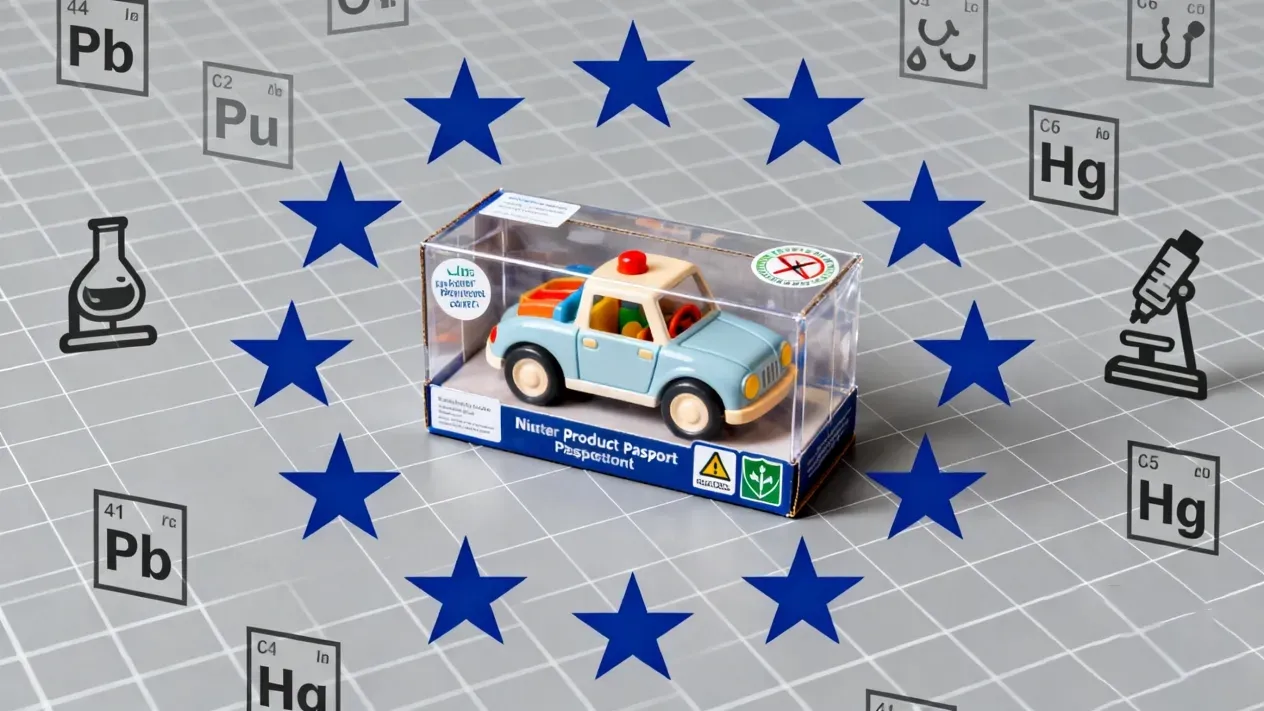
Banned Substances List:
- Endocrine disruptors
- PFAS (permanent chemicals)
- Dangerous bisphenols
- Skin sensitizers and substances harmful to the respiratory system
In addition, the regulation specifically stipulates that toys for children under three years or toys used orally must not add any allergenic fragrances. These measures aim to maximize protection of children’s health and avoid potential harm from harmful substances.
Comprehensively Upgraded Safety Assessment Requirements
According to the new regulation, manufacturers and importers must conduct more comprehensive risk assessments, covering:
Chemical, physical and mechanical hazards
Electrical hazards and flammability
Hygiene and radioactivity
Digital risk protection in electronic toys
The background of this strengthened regulation is alarming: In 2023, toys were the second most notified category in the EU dangerous product warning system, and of the €6.5 billion worth of toys imported by the EU that year, 80% came from China. This means the safety issues targeted by the new regulation are closely related to China’s export industry.
Digital Product Passport: “Revolutionary” Change in Toy Import-Export
The most eye-catching innovation in the new regulation is the mandatory requirement for all toys to be equipped with digital product passports. This system accessed via QR codes aims to:
Enhance product traceability
Accelerate customs inspection speed
Strengthen market monitoring
Ensure immediate access to safety warnings
Notably, according to the Digital Services Act, toys that do not meet requirements will be considered “illegal online content” and face severe penalties.
Transition Period and Implementation Timeline

Although the regulation takes effect on the 20th day after publication, member states and industry will have a four-and-a-half-year transition period to gradually implement new measures. This arrangement considers industry adaptation costs while reflecting the EU’s determination to resolutely improve toy safety standards.
Marion Walsmann, rapporteur for the European People’s Party of Germany, stated: “With the introduction of the new toy safety regulation, Europe has sent a clear signal: safety must not be left to chance. This regulation is a win-win for everyone: consumers, manufacturers, and our children’s future.”
To Respond to New Regulations, You Need a Truly “Local” Logistics Partner
Facing this major regulatory change, professional localized support is particularly important. MYU LOGISTICS, as a Chinese logistics team rooted in Europe, provides you with key support leveraging local advantages:
We are an overseas Chinese logistics company rooted in Spain and Morocco, not “arranging logistics across the ocean” for you, but truly “standing in Europe and Africa” to handle your affairs. 100% local staff, overseas staff 100% living locally, supporting Chinese, English, Spanish, French, Italian, Arabic online services.
Customs Pre-Review: Familiar with local regulations, review technical documents in advance to ensure DPP compliance
Full Visibility: Local teams in important ports such as Valencia, Barcelona, Tangier
Multilingual Service: Support Chinese, English, Spanish, French, Italian online communication
Think New Regulations Are Complex? Need Professional Guidance?
Welcome to consult MYU LOGISTICS