

Emergency Alert: 2026 European Supply Chain Crisis Erupts
On February 5, 2026, one of Europe’s busiest transportation hubs—Madrid Barajas Airport—faced an unprecedented crisis. A sudden water pipe burst accident, like a “water column,” washed away the critical M-14 passage connecting airport terminals T1-T3 and T4, with water depths reaching 1.2-1.4 meters. Floodwaters instantly submerged the tunnel, forcing drivers to climb onto car roofs and wait for rescue. Meanwhile, the passport control system at terminal T4S also collapsed due to software failure, with travelers queuing for kilometers, and thousands of passengers missed their flights.

This is not an isolated incident. According to the “2026 Annual Supply Chain Risk Report” published by Everstream Analytics, Europe is facing unprecedented supply chain threats: cyber attacks rose significantly between 2021-2025, with attacks on logistics operations alone growing by 61% in 2025; by 2040, the global infrastructure investment gap will reach $10.6 trillion, with $3.6 trillion dedicated to logistics and transportation; in the summer of 2025 alone, extreme weather caused €43 billion in losses to Europe.

📊 2026 Supply Chain’s “Triple Threat”
1. Aging Infrastructure: Systemic Risks Accumulating
The Madrid airport incident exposed the fragility of European infrastructure. McKinsey’s 2025 estimates show that by 2040, the world will need $10.6 trillion in infrastructure investment, with $3.6 trillion dedicated to logistics and transportation. Recent extreme weather events have exposed weaknesses, including hurricanes in Sri Lanka damaging road networks and disruptions to ports and manufacturing supply chains in Southeast Asia.
2. Surge in Cyber Attacks: Invisible Threat in the Digital Age
Everstream data shows that cyber attacks on logistics operations grew by 61% in 2025, with hackers systematically targeting ports, carriers, and third-party logistics providers. GPS jamming and spoofing technologies are affecting air and maritime traffic in Europe, with related activities intensifying in the Baltic Sea region since August 2024, a region that handles approximately 15% of global freight.
3. Normalization of Extreme Weather: Direct Impact of Climate Change
Global flood-related economic losses have risen 27% since 2000, with agricultural supply chains particularly affected. In the summer of 2025, Europe lost €43 billion due to heatwaves, droughts, and floods. Cocoa prices surged nearly 300% in late 2024 and early 2025, highlighting the growing volatility in food and commodity markets.

Limitations of Traditional Logistics Models
Language Barriers: Communication Dilemmas in Emergencies
When Madrid airport rescue teams needed rapid coordination, language barriers could cause critical information delays. Traditional international logistics providers often rely on standard English communication, which can lead to misunderstandings in localized scenarios like Spain.
Regulatory Blind Spots: Challenges of Europe’s Complex System
The EU’s customs, tax, and transportation regulatory system is extremely complex and constantly changing. Lack of understanding of local specific regulations can lead to serious consequences such as customs clearance delays and tax fines.
Delayed Emergency Response: Fatal Weakness of Decision Chains
Remotely managed logistics models have inherent response delays. When emergencies occur, decisions must pass through multiple levels, often missing the best response timing.
Network Vulnerability: Risk Concentration at Single Nodes
Relying on a single transportation channel and limited local networks, once a critical node fails (such as the Madrid airport tunnel), the entire supply chain can fall into stagnation.
Summary and Outlook
The Madrid airport crisis at the beginning of 2026 is just a microcosm of the challenges facing global supply chains. As infrastructure ages, climate change intensifies, and digital risks rise, supply chain disruptions will become the “new normal” that businesses must face.
In this context, logistics solutions based on localized operations show unique advantages. It’s not just transportation services, but a comprehensive solution for supply chain risk management.
Businesses need to reassess their logistics strategies, shifting from单纯的 “cost optimization” to “risk management and resilience building.” Choosing the right logistics partner and building a risk-resistant supply chain network will be an important component of future business competitiveness.
🚀 MYU Logistics: Providing Professional Local Logistics Services in Europe
Faced with these challenges, European localized logistics operations have become the choice of more and more businesses. Local teams, language advantages, and network resources show irreplaceable value in crisis response.

🌍 Who We Are?
- 100% European Local Team: All employees are recruited and trained locally in Europe, familiar with EU regulations, taxation, and operational processes
- Multilingual Professional Services: Service languages cover Chinese, English, Spanish, and French, ensuring barrier-free communication and more precise responses
- Spanish Local Company: Relying on Spanish local entities, providing efficient distribution and warehousing networks covering all of Europe
What We Can Do?
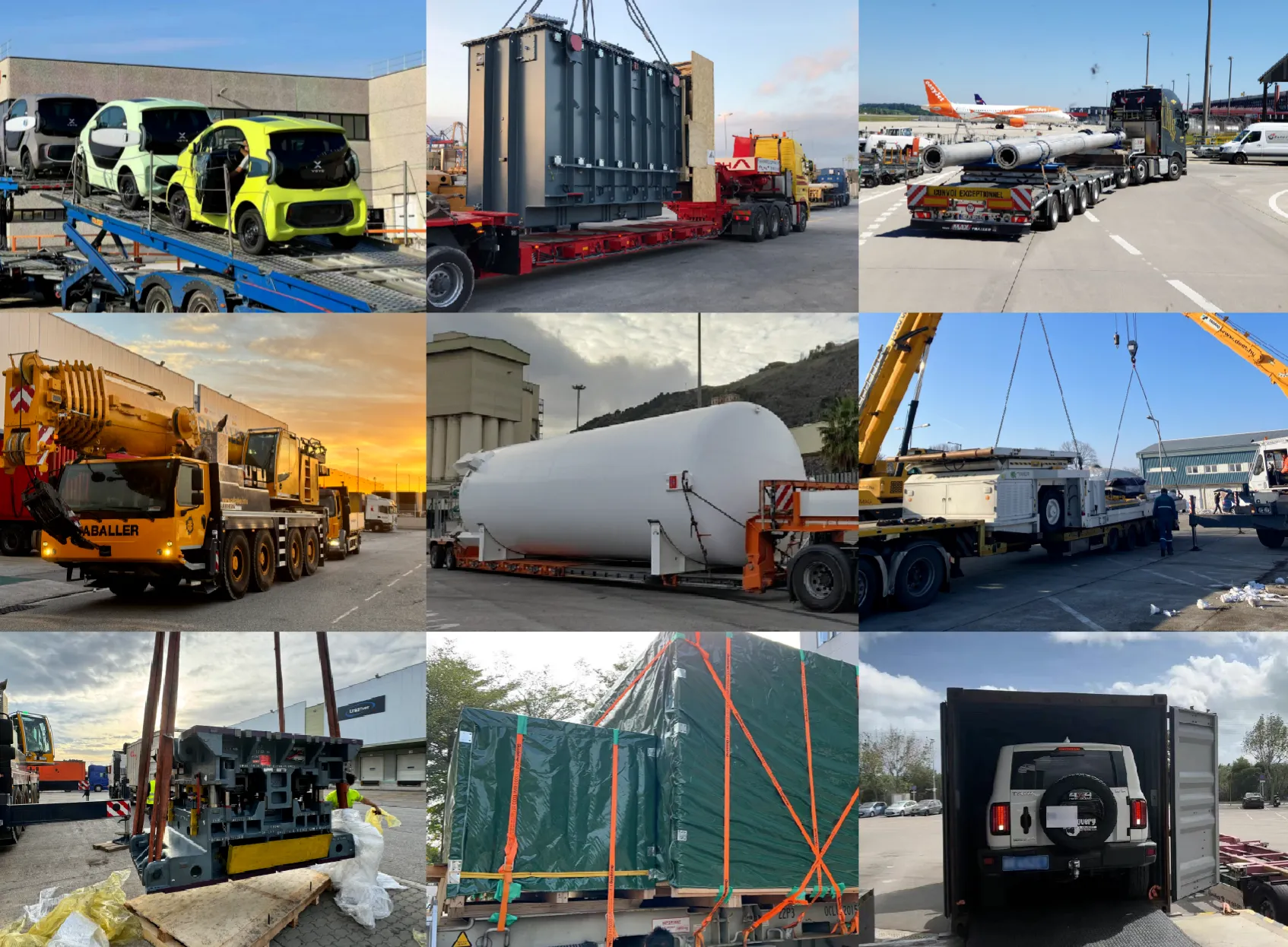
- Full-Link Sea Freight Services: FCL and LCL transportation, covering major ports and inland points
- Diversified Trade Term Services: Supporting DDP, DDU, DAP, EXW and other terms, providing full-process customs clearance services including VAT and customs duties
- European Local Land Transport and Warehousing: Intra-European trucking distribution, warehousing and collection, short-term storage and distribution services
- Special Cargo Handling: Professional handling of oversized, over-width, over-height, overweight cargo, as well as cold chain, furniture, equipment, clothing, building materials, compliant dangerous goods and other special categories
✅ Our Advantages?
- Compliance and Transparency: Refusing “gray clearance”, all operations are legal and compliant, processes are fully traceable
- Tax Optimization: Combining European local tax policies to provide compliant tax planning suggestions, optimizing supply chain costs
- End-to-End Project Management: From booking to customs clearance to final distribution, dedicated follow-up throughout, ensuring cargo arrives safely and on time
- Local Network Support: Relying on multiple warehousing and partner nodes in Spain and Europe, achieving rapid response and flexible scheduling
💬 Contact MYU for consultation now to ensure your European business runs smoothly!