
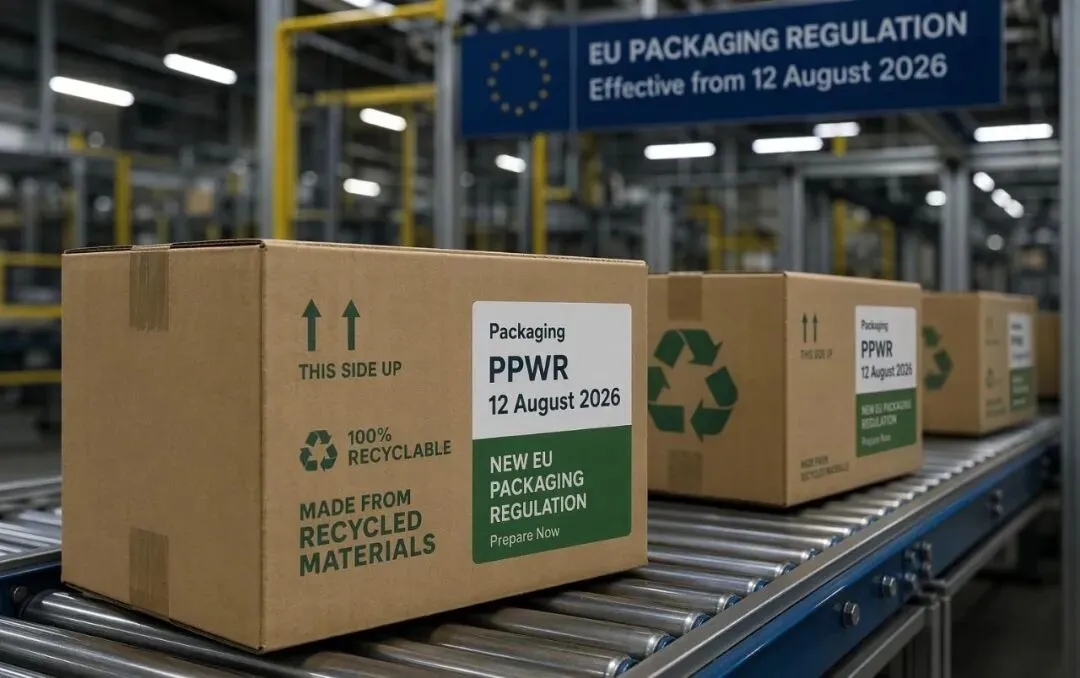
As of August 12, 2026, the EU’s Packaging and Packaging Waste Regulation (PPWR) has officially entered into application.
What are the key points of the PPWR that deserve special attention?
1. Mandatory Technical Requirements
1.1 Hazardous Substance Limits: Packaging Must Also “Pass the Environmental Test”
The PPWR imposes stricter requirements on hazardous substances in packaging.
All packaging: the total content of the four heavy metals — lead, cadmium, mercury, and hexavalent chromium — must not exceed 100 mg/kg. Printing inks, coatings/laminates, and other parts of the packaging also need attention.
For food-contact packaging, special attention must be paid to PFAS (per- and polyfluoroalkyl substances):
- Individual PFAS substances: <25 ppb
- Total non-polymer PFAS: <250 ppb
- Total of all PFAS: <50 ppm
Products related to food contact — such as baking paper, oil-proof coatings, silicone mats, and kitchenware packaging — in particular require testing and compliance assessment in advance.
Simply put: packaging must not only be “recyclable” — it must first ensure that its hazardous substances do not exceed the limits.
1.2 Extended Producer Responsibility (EPR): Registration ≠ Compliance
For packaging entering the EU market, companies also need to pay attention to the “Extended Producer Responsibility (EPR)” requirements.
Simply put:
- Non-EU companies exporting products usually need to complete packaging EPR registration in accordance with the requirements of the destination country of sale;
- EPR systems in different countries are relatively independent — registration in one country cannot directly substitute for registration in another;
- If products are sold to multiple EU countries, the corresponding EPR obligations must be fulfilled separately according to each country’s requirements.
⚠️ A Common Misconception
Having EPR registration ≠ the packaging is fully compliant.
EPR mainly addresses the recycling responsibility for packaging waste, but the packaging itself must also meet the corresponding material, testing, and declaration of conformity requirements.
EPR answers “who is responsible for recycling,” while packaging compliance answers “whether this packaging itself can enter the market.”
The two must not be confused.
1.3 Declaration of Conformity (DoC)
Exporters must issue a DoC declaring that the packaging meets all PPWR requirements, with supporting test reports on file; customs and market surveillance authorities can access them at any time. Without a DoC, the packaging is non-compliant.
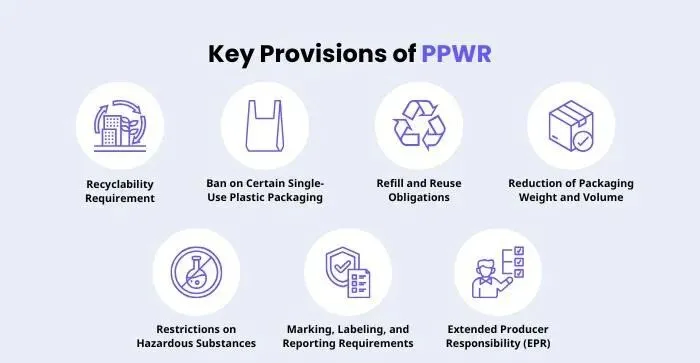
2. Phased Medium- and Long-Term Mandatory Requirements
① Recyclability Grading (A/B/C Grades)
| Recyclability Grade | Recyclability Level | Market Access Trend |
|---|---|---|
| Grade A | ≥95% | Allowed long-term |
| Grade B | ≥80% | Still allowed from 2038 |
| Grade C | 70%–80% | Allowed 2030–2037, restricted after 2038 |
| Below Grade C | <70% | Banned from the EU market from 2030 |
Risk point: packaging with paper-plastic or aluminum-plastic composites that are difficult to separate will most likely fail to reach Grade C and cannot be used after 2030; try to choose single-material packaging (pure paper, pure PE, pure PP).
② Plastic Packaging Must Also “Use Recycled Content”
The PPWR not only focuses on whether packaging can be recycled, but also requires a certain proportion of post-consumer recycled (PCR) material in plastic packaging.
| Plastic Packaging Type | From 2030 | From 2040 |
|---|---|---|
| PET food-contact packaging | ≥30% PCR | ≥50% PCR |
| Other plastic packaging | ≥35% PCR | ≥65% PCR |
PCR (Post-Consumer Recycled) refers to recycled materials obtained from plastics used by consumers and processed through recycling.
Note that not all “recycled materials” count toward the PCR percentage. When choosing recycled materials, companies need to pay attention to their origin and whether they meet the relevant PPWR requirements. Certain medical products, infant food-contact packaging, etc. have corresponding exemptions or special provisions.
③ Waste Reduction, Ban on Over-Packaging (Effective 2030)
Packaging void ratio must not exceed the limits; excessive packaging layers are banned; packaging weight and volume are only allowed to the minimum extent necessary to maintain product safety — “big box, small goods” empty-cavity packaging is not allowed.
④ Labeling (Mandatory from 2028-08-12)
Harmonized EU material recycling classification icons; reusable packaging requires a QR code to track the number of reuse cycles. During the current transition period, it is recommended to print material identification in advance to prepare for 2028.
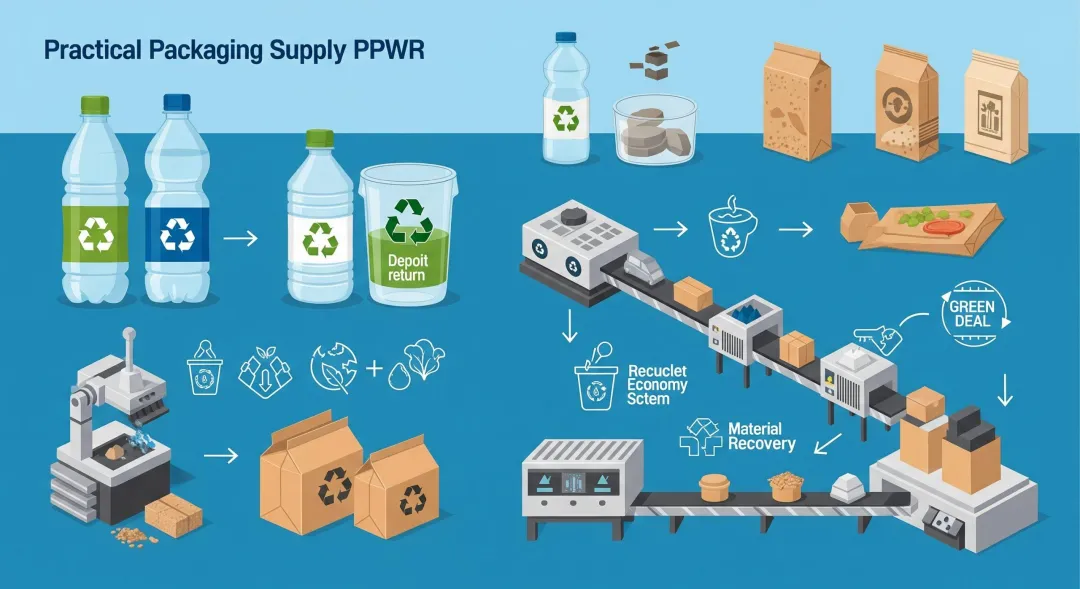
3. What Should Freight Forwarders Pay Attention to Regarding the PPWR?
3.1 Highest-Risk Cargo Types
Food and kitchenware, cosmetics, home furniture, e-commerce goods, large amounts of plastic cushioning packaging, laminated film packaging; for industrial steel and equipment, also check wooden pallets, stretch film, desiccants, and all other ancillary packaging — not just the product itself.
3.2 Common Misconceptions
Misconception 1: Having German EPR covers all of Europe?
No ❌.
EPR compliance is not simply “one certificate for all.” When entering the market of a different member state, you need to assess according to the local producer responsibility system.
Misconception 2: Is the shipping container packaging?
Also no ❌.
The container itself is not the same as cargo packaging, but wooden pallets, stretch film, cushioning materials, etc. used during cargo transport may all involve packaging compliance.
Misconception 3: Does completing EPR mean PPWR compliance?
Definitely not ❌.
EPR is only one part of the packaging producer responsibility system. The PPWR covers multiple aspects including packaging materials, design, labeling, conformity, and producer responsibility.
Misconception 4: Only need to manage the product color box?
This is what many companies easily overlook ❌.
Besides sales packaging, also pay attention to the packaging used during transport, warehousing, and distribution.
3.3 The “Three Essentials” to Prepare Before Shipment
① EPR (ERN) registration number for the destination country
② EU Authorized Representative (AR) information
③ DoC declaration + packaging material test reports (heavy metals, PFAS, etc.)
The PPWR mainly falls under post-market surveillance, not mandatory customs clearance documents; however, after the goods arrive at port, EU market surveillance authorities can conduct spot checks at any time. Once found non-compliant, goods may be detained or returned, incurring high terminal and container detention charges.
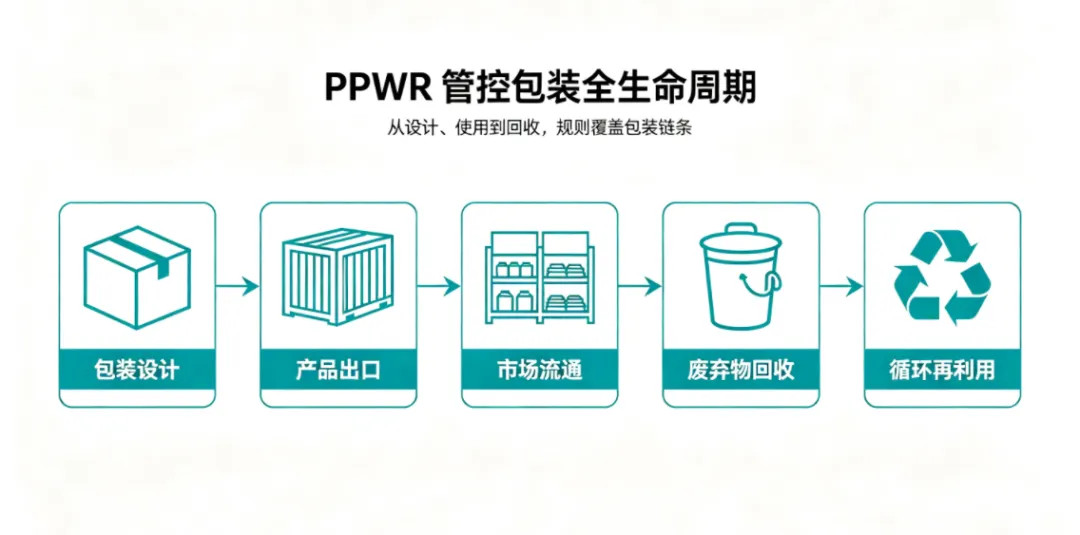
4. Key PPWR Timeline
| Date | Main Requirements |
|---|---|
| August 12, 2026 | Heavy metals, PFAS and other relevant requirements, as well as EPR registration and DoC declaration requirements, take effect; packaging recyclability enters a transition phase |
| January 1, 2030 | Recyclability requirements are further raised; PCR recycled content requirements for plastic packaging take effect, and over-packaging is restricted |
| January 1, 2038 | Recyclability requirements are further raised; lower-grade packaging will gradually exit the EU market |
5. Advice for Fellow Freight Forwarders
- For all clients shipping to the EU, flag PPWR risks at the booking stage and inform clients in writing that packaging compliance responsibility lies with the shipper;
- For new clients — especially furniture, FMCG, and kitchenware — proactively ask whether they have completed EPR registration, DoC, and testing;
- Make the distinction: EPR is recycling responsibility, packaging material testing is product safety — two separate matters that must not be confused;
- Old stock: inventory already placed on the EU market before 2026-08-12 is generally not recalled; all newly shipped goods to the EU market must comply with the new regulation.
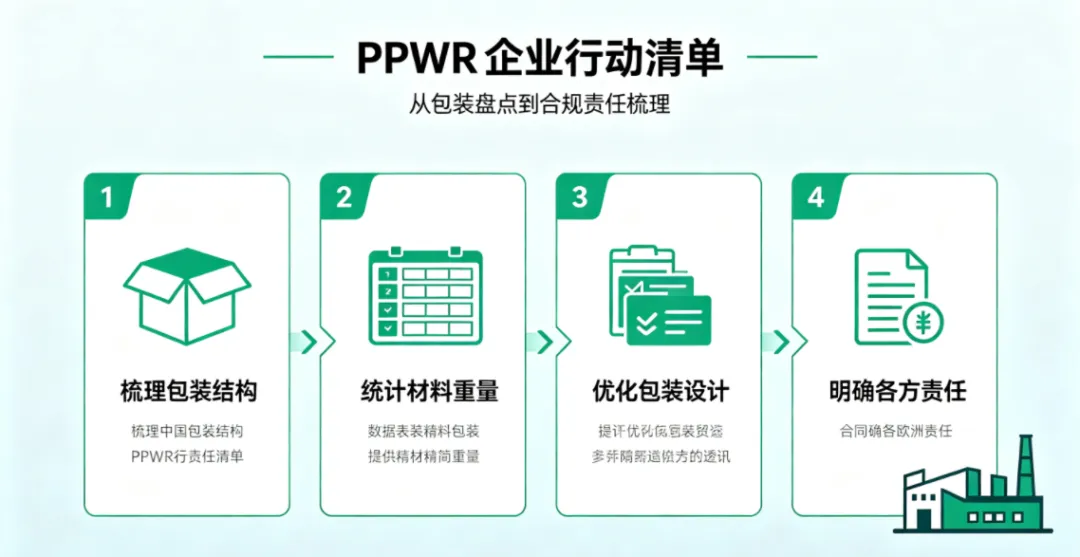
Behind the PPWR is actually a change taking place in the European market:
A gradual shift from “product compliance” to “supply chain compliance.”
Packaging, environmental protection, and supply chain management will increasingly become part of operating in the European market.
MYU Logistics, based in Spain, provides Chinese enterprises with European sea freight, land transport, warehousing, transshipment, customs clearance, and intra-Europe logistics services.
What we care about is not just “shipping goods to Europe.”
We help Chinese enterprises smoothly connect the entire logistics chain from the factory in China to the end customer in Europe.
Entering Europe, logistics is only the first step.
Truly succeeding in the European market in the long run requires continuous compliance and localized operation of the entire supply chain.
About MYU Logistics
MYU Logistics is a locally registered Chinese logistics company in Spain, dedicated to serving Chinese enterprises expanding into European and North African markets.
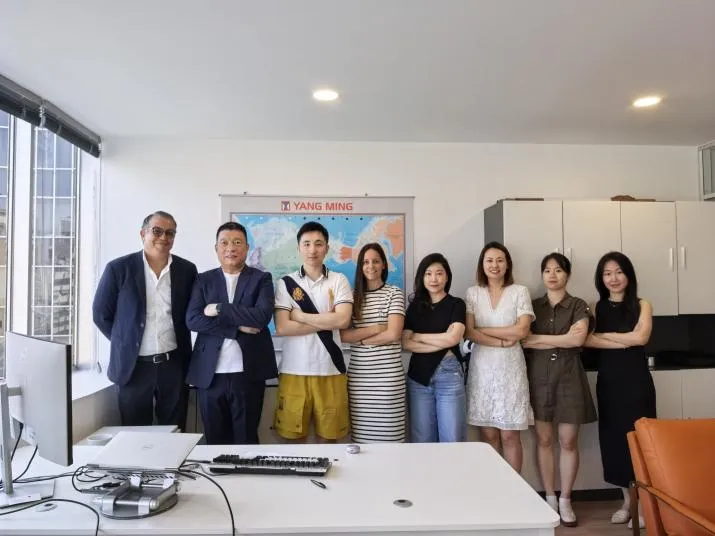
100% Local Team
- All employees are recruited and trained locally in Europe and Africa, familiar with EU regulations, taxation, and operational procedures
Multilingual Professional Services
- Service languages include Chinese, English, Spanish, and French, ensuring seamless communication and precise response
Local Company
- Leveraging local entities in Spain/Morocco to provide efficient distribution and warehousing networks covering Europe and North Africa
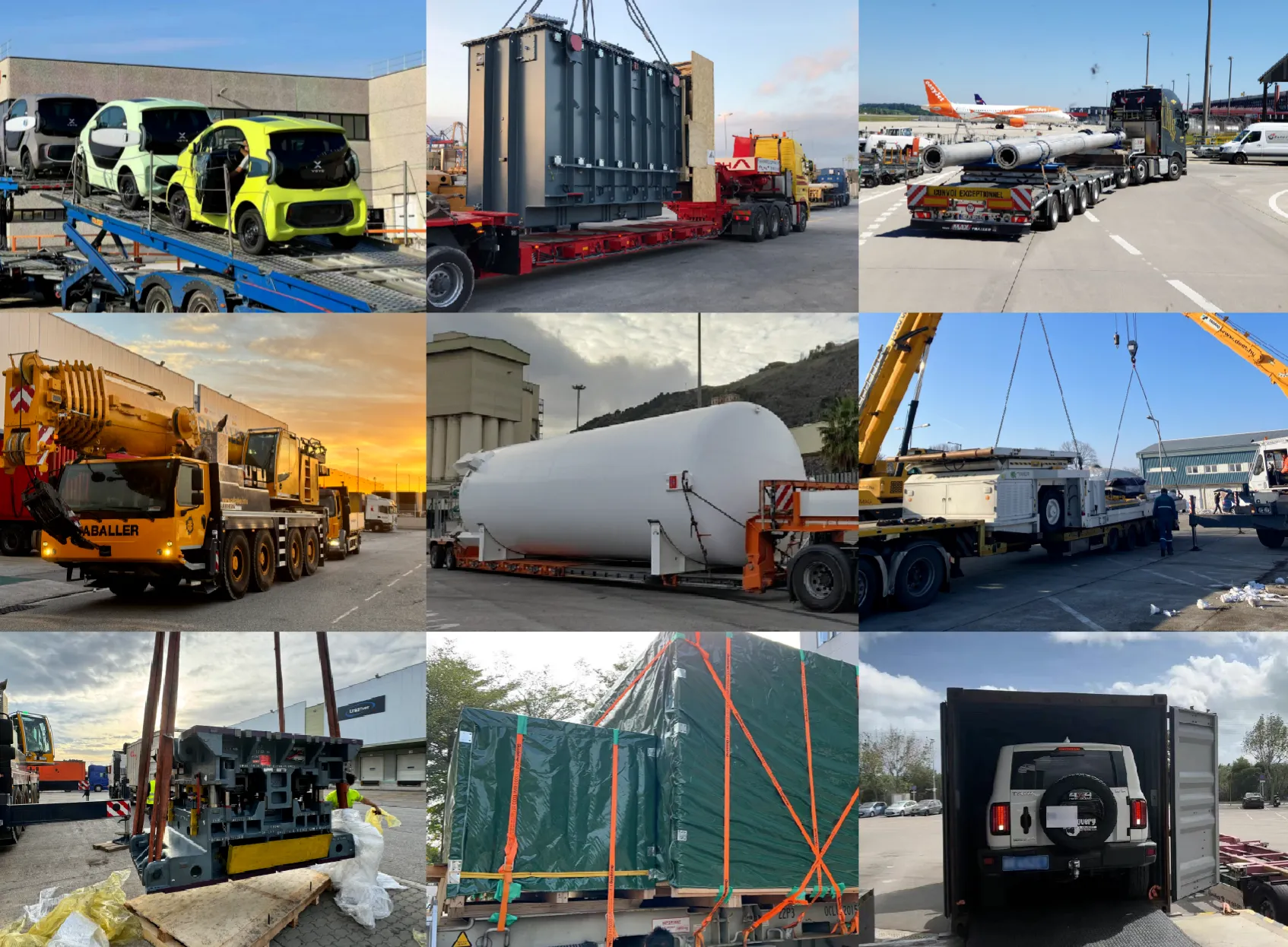
🚛 What Can We Do?
Full-Chain Sea Freight Services : FCL, LCL, and air freight transportation covering major European ports and inland points
Diversified Trade Term Services : Supporting DDP, DDU, DAP, EXW and other terms, providing full customs clearance services including VAT and duty payment
Local Land Transportation & Warehousing : Trucking, warehouse consolidation, short-term storage, and distribution services
Special Cargo Handling : Specialized handling of overlength, overwidth, overheight, overweight cargo, as well as cold chain, furniture, equipment, apparel, building materials, compliant dangerous goods, and other special categories
✅ Our Advantages?
Compliance & Transparency : Rejecting gray customs clearance, all operations are legal and compliant with fully traceable processes
Tax Optimization : Combining local tax policies to provide compliant tax planning advice and optimize supply chain costs
End-to-End Project Management : Dedicated follow-up from booking to customs clearance and final delivery, ensuring safe and on-time arrival
Local Network Support : Leveraging multiple warehouses and partner nodes across Europe and Morocco for rapid response and flexible scheduling